
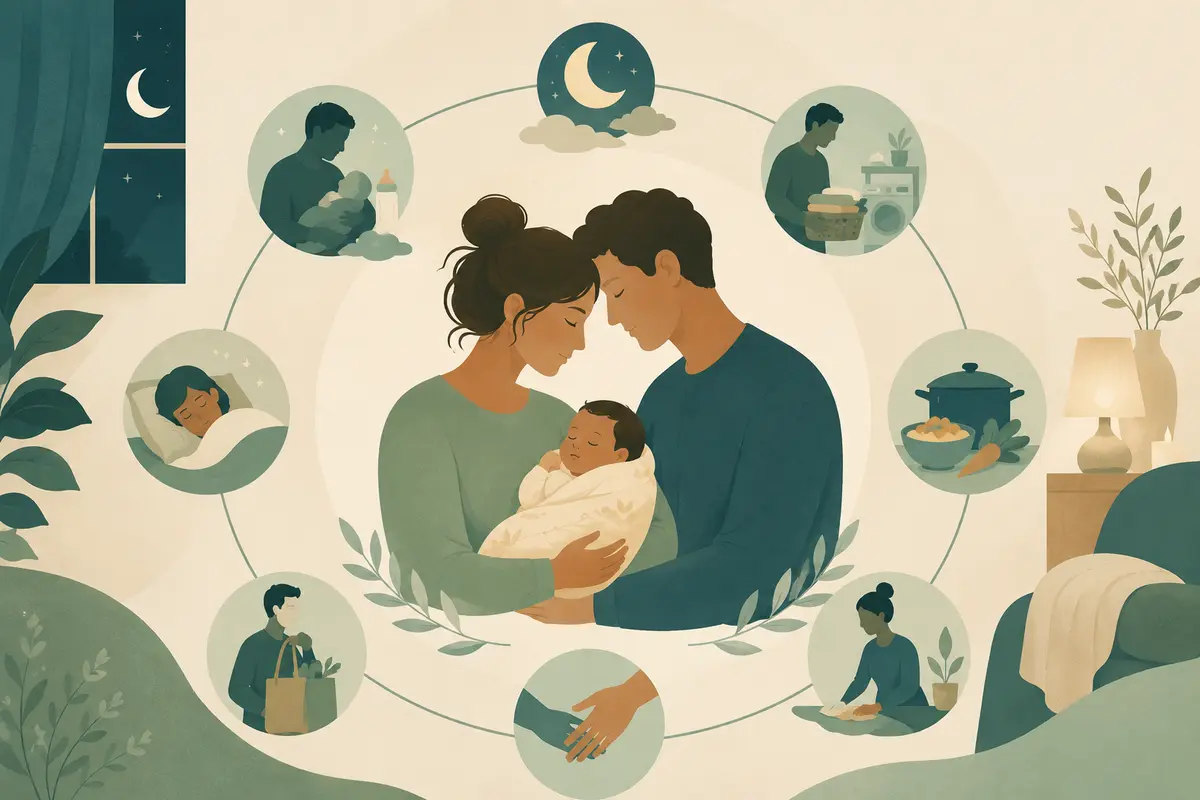
Reduce overload before solving everything
It is hard to discuss romance when someone cannot sleep or eat in peace. List night waking, childcare, household work and planning. Choose one change that gives each person some predictable recovery time.
Avoid arguing over whose tiredness is more legitimate. Different forms of work can be exhausting at the same time. The goal is to improve the shared arrangement, not designate a guilty partner.
Discuss closeness without pressure
Readiness for sex can change after childbirth because of recovery, pain, worry and exhaustion. Discuss medical concerns with a clinician. Pressure or resentment after a refusal makes intimacy less safe.
Try forms of contact that do not imply a sexual obligation: a hug, a conversation or a walk. Consent remains freely given at every stage. Affection should not become a test that the recovering parent has to pass.
Hold a short weekly check-in
Ask three questions: what was hardest, what helped and which one task should change next week? Keep the conversation manageable rather than turning it into a review of every mistake.
One possible opening is: “We both seem exhausted and have started treating each other like opponents. Can we choose one change today that gives each of us protected rest?” Adjust the plan to feeding, health and available support rather than imposing a rigid formula.
Know when outside help is needed
Persistent low mood, loss of interest, severe anxiety or difficulty functioning deserve professional assessment. Do not assume these experiences must be solved through willpower or better couple communication alone.
Thoughts of harming yourself or the baby, severe confusion, unusual beliefs or hearing or seeing things others do not require urgent medical help. Contact local emergency services. Practical support from others can accompany care, but should not replace it.
Related guides
Explore your situation
Describe what happened and what you want to change. SovaMind can help you prepare questions and a next step.
Explore your situation